
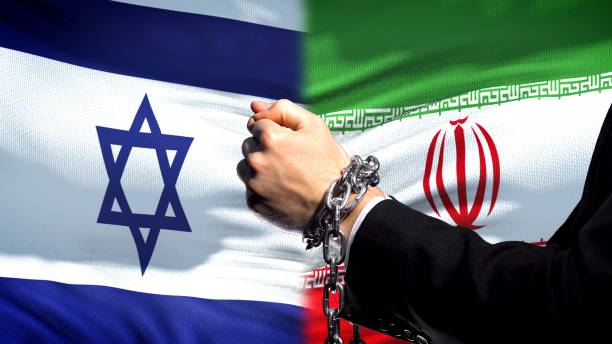

The Iran Israel war background and latest news is one of the most searched and most important global topics right now. What many people are seeing in today’s headlines — missile attacks, airstrikes, U.S. involvement, oil market disruption, and fears of wider regional war — did not begin overnight. The current conflict is the result of years of tension, proxy battles, nuclear disputes, and repeated direct confrontations that have now exploded into open warfare.
If you are trying to understand what is happening, the biggest mistake is to look only at “today’s strikes” without understanding the deeper history. The Iran Israel war background and latest news makes much more sense when you see how the rivalry developed — from covert attacks and regional influence battles to direct military exchanges and eventually the current U.S.-Israel-Iran war.
In this article, you will get a clear background explanation plus the latest developments, written in a simple, humanized, SEO-friendly way.
1) Why Iran and Israel Have Been Enemies for So Long
To understand the Iran Israel war background and latest news, you first need to understand that Iran and Israel have not trusted each other for decades.
The rivalry became especially intense after the 1979 Iranian Revolution, when Iran’s leadership shifted toward a strong anti-Israel position. Since then, Iran has supported groups and political movements in the region that oppose Israel, while Israel has long viewed Iran as one of its most serious strategic threats. Over time, this rivalry became one of the most dangerous fault lines in the Middle East.
For years, the conflict mostly stayed in the shadows. Instead of full direct war, the confrontation often happened through:
- Proxy groups and regional allies
- Intelligence operations
- Assassinations and sabotage claims
- Cyber operations
- Airstrikes outside each other’s main territory
That long “shadow war” is the foundation of today’s crisis.
2) The Nuclear Issue Made Everything More Dangerous
One of the biggest reasons the Iran Israel war background and latest news became so explosive is Iran’s nuclear program.
Israel has long argued that Iran’s nuclear and missile development creates an unacceptable security threat. Iran has insisted its nuclear program has legitimate purposes, but the issue has repeatedly pushed the region toward confrontation.
This tension grew even more serious over the last several years as diplomacy weakened and military threats increased. By 2025 and 2026, the nuclear issue was no longer just a diplomatic argument — it had become one of the central military justifications used in the conflict. Reuters reported that the February 2026 attack came after repeated U.S.-Israeli warnings tied to Iran’s nuclear and ballistic missile programs.
So when people ask about the Iran Israel war background and latest news, the nuclear issue is one of the key pieces of the puzzle.
3) How the Conflict Moved from Proxy War to Direct War
For many years, Iran and Israel fought indirectly. But in recent years, that changed dramatically.
According to Reuters and the Council on Foreign Relations, the confrontation shifted from indirect hostility to direct exchanges of strikes, especially after major regional flashpoints and attacks linked to Iranian and Israeli targets. Reuters notes that in 2024, a suspected Israeli strike on the Iranian embassy compound in Damascus helped trigger a new phase of direct retaliation. CFR similarly says the confrontation moved from proxy-based hostilities to direct exchanges.
That was a major turning point.
Instead of only battling through allied groups or covert operations, Iran and Israel began showing they were willing to attack each other more openly.
This is what transformed the crisis from a dangerous rivalry into something much closer to a real interstate war.
4) The 2025 Escalation Changed the Region
The Iran Israel war background and latest news cannot be understood without mentioning the major escalation that took place in 2025.
Reuters reporting says Israel carried out strikes in Iran in 2025 aimed at disrupting nuclear infrastructure, and later summaries note that Israel and Iran had already fought a shorter direct air war before the current conflict. In other words, the 2026 war did not come out of nowhere — it came after an earlier direct military confrontation that left the region on edge.
That earlier escalation mattered because it:
- Lowered the threshold for future attacks
- Increased military readiness on all sides
- Made another round of war much more likely
- Reduced confidence in diplomacy
By the time 2026 began, the region was already sitting on a powder keg.
5) What Triggered the Current 2026 War?
This is the question most readers care about when searching for Iran Israel war background and latest news.
According to Reuters, the current phase of war began on February 28, 2026, when the United States and Israel launched what was described as a “pre-emptive attack” against Iran. Reuters reported that the attack followed repeated U.S.-Israeli warnings and came amid tensions over Iran’s nuclear and ballistic missile activities.
This was a huge turning point because it meant:
- Israel was no longer acting alone
- The United States became a direct military participant
- The conflict shifted into a much larger and more dangerous phase
That is why the current Iran Israel war background and latest news is not just about Israel and Iran anymore. It is now also very much about the United States.
6) Why the United States Became Directly Involved
The U.S. role is central to the Iran Israel war background and latest news.
While the United States has long been involved in Middle East security and closely aligned with Israel, the current conflict became much more serious once Washington moved from political and strategic backing into active military participation.
Reuters reported that the U.S. military operation had a defined launch timeline and that the attack on Iran was approved directly by President Donald Trump. AP also reports that Trump has repeatedly framed the campaign as one with “core strategic objectives.”
The main reasons cited for U.S. involvement include:
- Pressure on Iran’s military and strategic capabilities
- Concerns about nuclear and missile escalation
- Support for Israeli security objectives
- Deterrence against broader regional retaliation
But the result has been clear: the war is now much wider and much harder to contain.
7) What Has Happened Since the War Began
Once the war started in late February, the situation escalated quickly.
According to Reuters, AP, and Al Jazeera, the war has involved:
- Repeated U.S.-Israeli airstrikes inside Iran
- Iranian missile and drone attacks
- Strikes affecting infrastructure and strategic sites
- Broader regional tension involving Gulf states and shipping routes
- Major fears over oil and energy security
This is important because the Iran Israel war background and latest news is not just a military exchange. It is a full geopolitical crisis with implications for:
- Energy prices
- Shipping routes
- Civilian safety
- Diplomacy
- Global markets
In other words, this war is regional in geography but global in consequences.
8) Latest News: What Is Happening Right Now?
Now let’s move from background into the latest news.
As of April 2, 2026, multiple recent reports indicate that the conflict is still active and still highly unstable.
Key recent developments include:
- Continued U.S.-Israeli attacks inside Iran
- Ongoing Iranian missile and drone retaliation
- Public claims from Washington that military goals are “nearing completion”
- Iranian rejection of U.S. claims that Tehran is seeking a ceasefire
- New concern over the Strait of Hormuz and oil disruption
This means the Iran Israel war background and latest news is still changing by the hour.
9) What Happened in Iran This Week
One of the biggest parts of the Iran Israel war background and latest news is the continuation of strikes inside Iran.
Al Jazeera reported today that U.S.-Israeli attacks continued across Iran and that sites hit included industrial and pharmaceutical-related facilities, including in Isfahan and other areas. Visual reporting also showed smoke and major fire damage after recent strikes.
Reuters’ maps and charts coverage has also documented the spread and significance of attack zones during the war.
This matters because it shows the conflict is not symbolic or limited. It is affecting real infrastructure and major cities, which raises the stakes dramatically.
10) Iran’s Latest Response
Iran has continued to respond militarily and politically.
AP reported today that Iran launched new missile attacks after Trump’s address, targeting Israel and Gulf Arab areas while also maintaining pressure around the Strait of Hormuz. AP also said Iran rejected U.S. outreach claims for a ceasefire.
That tells us something very important about the Iran Israel war background and latest news:
Iran is trying to show that it has not been neutralized, and that it can still:
- Retaliate militarily
- Threaten strategic shipping routes
- Resist politically and symbolically
This is why the conflict remains so dangerous.
11) What Israel Is Facing Right Now
Israel is not only attacking — it is also still under active threat.
Al Jazeera reported one of Iran’s largest missile barrages in weeks, causing injuries and damage in central Israel. Other live reporting today has described repeated salvos and ongoing alert conditions.
This matters because the Iran Israel war background and latest news is not a one-way story.
Israel continues to face:
- Missile risk
- Air defense pressure
- Domestic security strain
- Political pressure over how long the war should continue
So even though Israel remains a key offensive actor, it is also still absorbing the cost of continued escalation.
12) Is a Ceasefire Coming?
One of the biggest questions in the Iran Israel war background and latest news is whether this war is heading toward a ceasefire or a wider escalation.
Right now, the answer is: unclear.
Recent reports show:
- U.S. leaders suggesting the war could end relatively soon
- Public claims that military goals are nearly complete
- Iranian officials denying claims that they requested a ceasefire
- Continued strikes despite public talk of de-escalation
That usually means one thing:
Diplomatic messaging may be happening, but the battlefield has not stabilized yet.
So yes, there may be backchannel efforts — but no one should confuse that with confirmed peace.
13) Why the World Is Watching So Closely
The Iran Israel war background and latest news matters globally for several reasons.
1. Oil and Energy
Reuters reported that oil prices jumped sharply after renewed signs that the war could continue and that supply routes could remain threatened.
2. Shipping and Trade
The Strait of Hormuz is one of the most important energy corridors in the world. Any prolonged instability there can affect fuel, freight, and trade.
3. Risk of Regional Spillover
The conflict has already had wider regional dimensions involving Gulf states, Lebanon, and strategic bases.
4. Civilian Cost
Recent reports continue to describe deaths, injuries, and damage affecting civilians and urban areas.
This is why the war is not just “another foreign conflict” in the news cycle. It has real global consequences.
14) What Could Happen Next?
The next stage of the Iran Israel war background and latest news could go in more than one direction.
Possible outcomes include:
- A limited but unstable de-escalation
- Continued strikes for days or weeks
- More Iranian retaliation
- More U.S. military pressure
- Broader regional disruption if shipping or neighboring states are hit again
At the moment, the conflict appears to be in a very dangerous middle stage:
- Too intense to call “contained”
- Too politically sensitive to guarantee expansion
- Too unstable to confidently call “almost over”
And that is why people are searching so heavily for Iran Israel war background and latest news right now.
Final Thoughts
The Iran Israel war background and latest news is ultimately the story of a long-running rivalry that has now become open war.
In simple terms:
- Iran and Israel have been hostile for decades
- Nuclear and missile tensions made the conflict worse
- Proxy conflict gradually turned into direct confrontation
- 2025 escalations laid the groundwork for a bigger war
- On February 28, 2026, the U.S. and Israel launched a major new attack on Iran
- Since then, the conflict has remained active, dangerous, and globally significant
If you are writing or publishing on this topic, this keyword has very high traffic potential, but it also requires frequent updates because the news is changing rapidly.

