
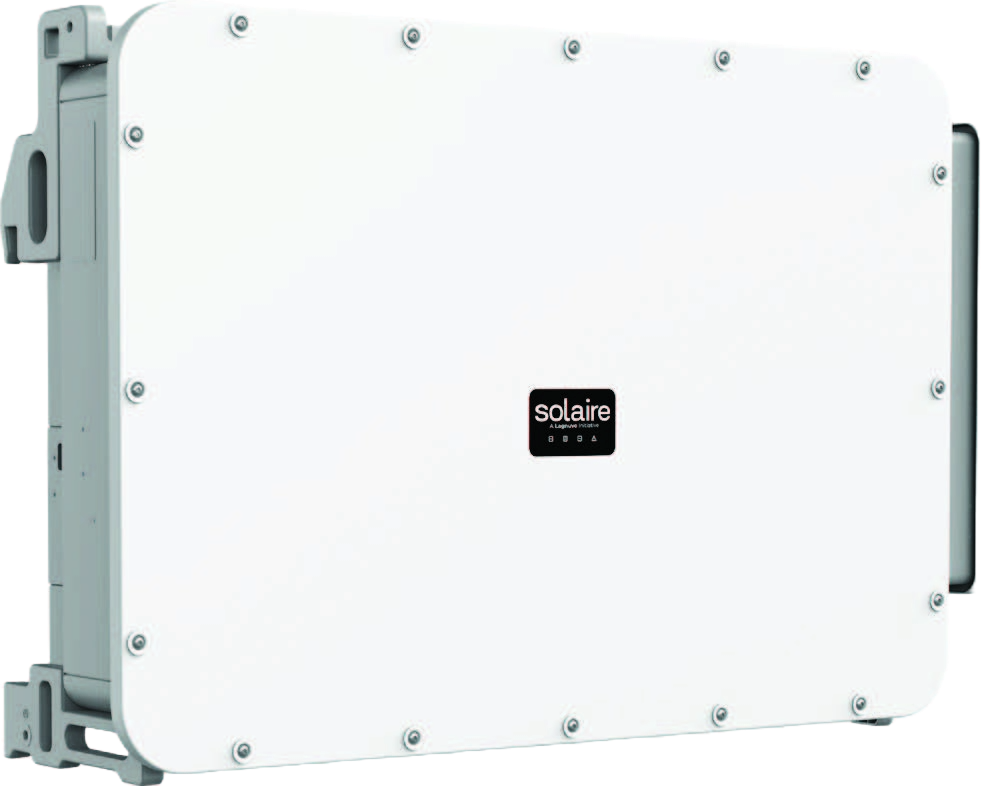

The word ‘inverter’ might conjure the image of a white box on a wall in a suburban garage, quietly converting solar energy for a single household. But the same fundamental technology, scaled up by orders of magnitude and hardened for industrial duty, plays a central role in India’s expanding utility-scale solar sector. A utility-scale solar inverter and a residential solar inverter share the same basic function, which is DC to AC conversion. However, they inhabit entirely different engineering worlds in almost every other respect. Solaire, an established solar inverter manufacturer in India, manufactures both, and this article explains what sets the utility-grade product apart.
Capacity: The Most Obvious Difference
A residential solar inverter typically operates in the 1 kW to 10 kW range. An on-grid solar inverter for a large commercial rooftop might reach 50 kW to 100 kW. Utility-scale projects may use either central inverters or string inverters deployed at scale. These units start at 75 kW and can extend to 350 kW per unit. A 50 MW solar farm will typically deploy 100 to 300 such units working in parallel. Solaire’s GRAND Series utility-scale inverter is engineered specifically for these large distributed installations, delivering high conversion efficiency.
Grid Compliance Requirements
The utility-scale solar inverter must comply with far stricter grid codes than residential models. At megawatt scale, a solar plant becomes a significant generator in its region, meaning its behaviour directly affects grid frequency and voltage. Utility inverters must support Low Voltage Ride Through (LVRT) and High Voltage Ride Through (HVRT)—the ability to stay connected and stabilise the grid during voltage disturbances rather than disconnecting. They must also support reactive power control, frequency response, and ramp rate limiting. These capabilities are tested and certified by the Central Electricity Authority (CEA) in India before any utility solar inverter can be legally commissioned.
String Architecture vs. Central Architecture
Large solar plants increasingly prefer distributed string architectures over a single massive central inverter. Solaire’s utility-scale range uses string-inverter architecture at industrial scale, meaning each array section has its own inverter with independent MPPT channels. If one unit fails, only a fraction of the plant goes offline. The entire installation continues running. This is in sharp contrast to older central inverter designs where a single fault could shut down the whole plant.
Environmental Hardening
Utility-scale installations in Rajasthan’s Thar Desert, Andhra Pradesh’s coastal plains, or Tamil Nadu’s semi-arid zones face extreme environmental stress: temperature swings from 0°C to 55°C, sandstorms, salt-laden coastal air, and intense monsoon humidity. Solaire’s utility inverters carry IP66 environmental ratings, meaning they are fully protected against dust ingress and high-pressure water jets. This level of protection is rarely needed for indoor-mounted residential models but is non-negotiable for large outdoor solar plants.
Diagnostics and Remote Management
A facility manager overseeing a 100 MW solar plant cannot physically inspect each inverter daily. Utility-scale solar inverters therefore include advanced diagnostic features: IV curve scanning to detect panel degradation, insulation resistance monitoring, string-level fault identification, and SCADA-compatible communication protocols like Modbus TCP and IEC 61850. Solaire’s Lagnuvo Power Track monitoring platform aggregates data from hundreds of inverters on a single dashboard, enabling predictive maintenance and rapid fault response.
Warranty and Service Agreements
Residential solar inverter warranties from companies like Solairetypically runupto 10 years. For utility solar inverters, the stakes are much higher. Solaire offers 10 to 15-year warranty terms on its utility-scale range, backed by 24-hour fault resolution service commitments. Investors in large solar projects include government schemes and private IPPs. For these investors, extended warranty support is just as important as the technical specification itself.
Conclusion
The utility-scale solar inverter is not simply a bigger version of the box on your garage wall. It is a precision grid-management device engineered for two to three decades of outdoor industrial operation. As India’s solar capacity races toward 500 GW, the quality of the utility solar inverter fleet will directly determine how much of that capacity translates into reliable, stable electricity. Solaire’s commitment to both residential and utility solar solutions reflects a belief that the solar future belongs to everyone. This includes homeowners in Kolkata fitting a 3 kW system, and developers commissioning a 250 MW ground-mounted plant in Gujarat.

